
On May 7th 2026, IGLYO published its report “LGBTQI Youth Mental Health in the Spotlight”. We congratulate IGLYO on this important document and are happy to have been able to contribute to the report by spreading the survey.
The report builds on research on the mental health challenges, needs and barriers of LGBTQI young people; the influence and experiences impacting them; experiences with mental health services; and policy and services affecting access to mental health. It also addresses the lack of comprehensive data on the health, and particularly the mental health, of LGBTQI young people across the European region, and confirms that many LGBTQI young people experience symptoms of depression and anxiety.
The report also includes a section on intersex youth mental health, which highlights that intersex young people experience even higher levels of anxiety and depression but lower rates of diagnosis.
According to the statistics from the report:
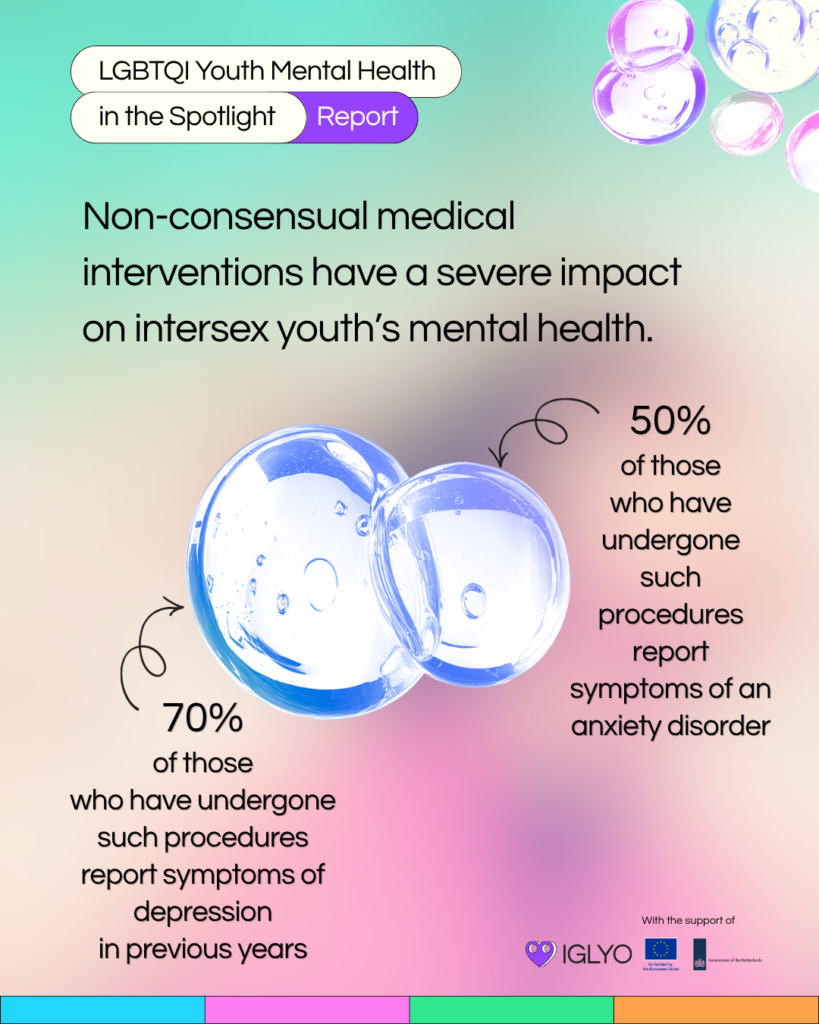
Among the respondents who have undergone medical treatments or interventions to modify their sex characteristics without their consent, 70% reported that they experienced symptoms of depression in previous years and 50% reported symptoms of an anxiety disorder, compared to 40.6% and 30.3% respectively among those who had not undergone such procedures.
41.7% of intersex respondents experienced symptoms of an anxiety disorder in the past 6 months, compared to 36.6% among endosex participants.
Only 4.3% of intersex respondents reported not experiencing symptoms, compared to 6.9% of endosex respondents.
In terms of diagnosis, intersex respondents reported a lower rate with 12.5%, while it is higher among endosex respondents with 14.5%.
“If anybody still has doubts on how much intersex genital mutilation and other non-vital medical treatments that are carried out on intersex people without their prior, fully informed consent impact negatively on their lives, these figures should convince them”, says Dan Christian Ghattas, Executive Director of OII Europe.
“Urgent action is needed.”, adds Magda Rakita, Co-Chair of OII Europe, and continues: “With the CM/Rec(2025)7, Council of Europe member states have access to comprehensive guidance about how to turn the situation of intersex youth, and all intersex people, around and finally ensure that they are protected against the human rights violations that affect their mental and physical health.”
In light of the findings of the report, OII Europe calls on the policy- and lawmakers to urgently act on this issue to protect LGBTQI youth’s mental health and ensure a healthy future for all.
You can download IGLYO’s full report here: https://www.iglyo.org/resources/lgbtqi-youth-mental-health-report
